Concrete Slab in Meridian, Idaho
A pad is thickness, base, and joints. It is not a patio name for the same pour.
Free estimate.
- Free estimates
- Treasure Valley
- Local crew
- One number
This job covers
- Shed and outbuilding pads.
- Shop and hobby-garage pads.
- Addition floor pads.
- Equipment and generator pads.
Concrete Slab in Meridian, Idaho
Meridian Quality Concrete pours a concrete slab in Meridian, Idaho for sheds, shops, lean-tos, and small additions that need a pad, not a driveway. Load, thickness, and how the water leaves the pad decide the spec.
Text (208) 741-7320 the length, width, and what will sit on the pad. A photo of the grade with a door in the frame beats a wrong square-foot guess.
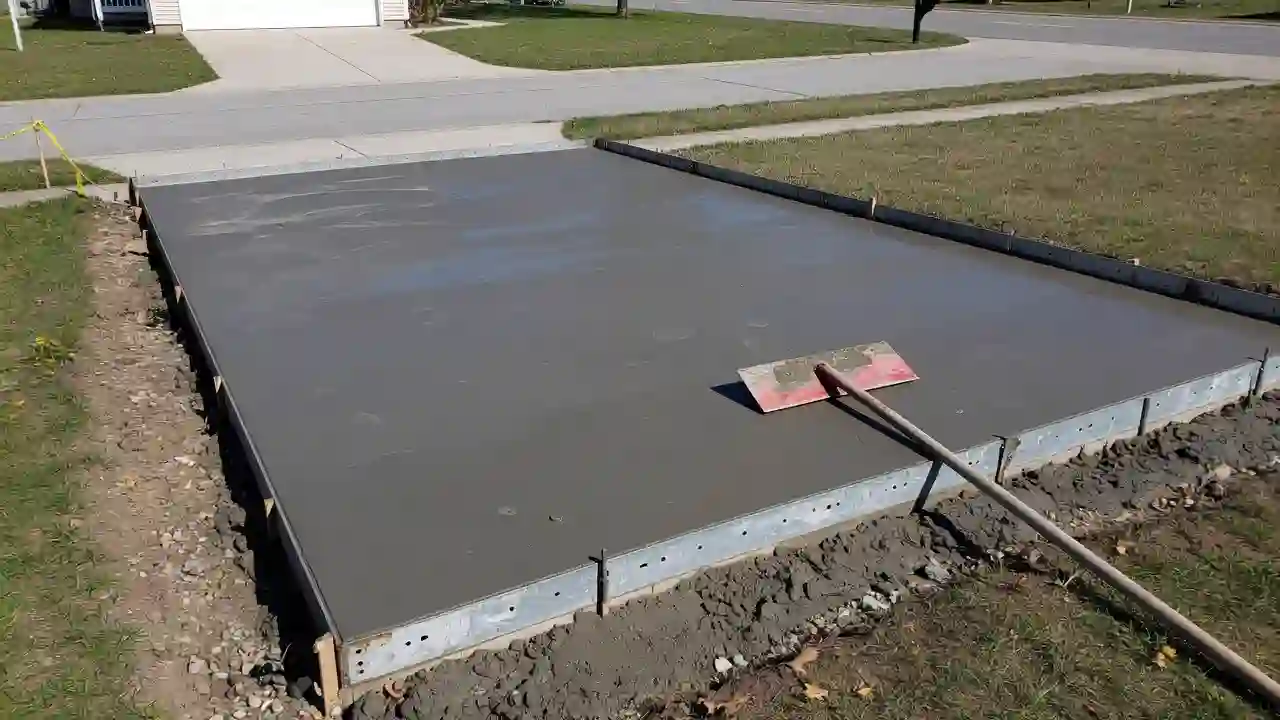
Concrete slab options for Meridian properties.
Shed and outbuilding pads.
A 10x12 or 12x16 storage shed wants a flat plane, a slight fall off the door, and enough thickness that a mower does not punch a corner. We form to the shed size plus a small lip if you want a drip edge.
Shop and hobby-garage pads.
Tools, a welder, and a parked truck are not a shed load. We go thicker, add #4 bars or heavier mesh, and joint so a long rectangle does not crack down the middle. Interior shops get a vapor retarder under the pour.
Addition floor pads.
A sunroom or a bonus room on grade is a pad with insulation and vapor control, not a patio. We coordinate openings for future walls. The connected contractor does not stamp structural drawings. If the city wants an engineer, that stamp is separate.
Equipment and generator pads.
A small, thick pad with extra steel and a dead-level top. Vibration and a heavy point load are the design, not broom looks. We isolate from the house stem so the pad can move a little.
How we handle a concrete slab in Meridian.
- We measure the pad, note the load, and look at chute access and overhead wires.
- We check subgrade. Fill, irrigation laterals, and old buried debris change the base.
- We write thickness, steel, vapor retarder, joints, and finish as separate lines.
- We compact, form, place 4000 psi mix unless the job names another, then screed and finish.
- We cut joints at the right spacing and leave cure instructions with you.
Materials and methods.
A typical exterior pad is 4 inches of air-entrained 4000 psi concrete over compacted crushed gravel. Shops and truck pads go 5 to 6 inches. Reinforcement is 6x6 W1.4/W1.4 mesh or #4 bars on chairs. Mesh raked into the pour after the truck leaves is not reinforcement.
ACI 302.1R still sets joint spacing on a pad. Isolation foam at the house. A 6-mil vapor retarder on interior shop floors, lapped and taped. Bull float, then broom or a harder trowel if epoxy is next. Cure compound. Geotextile on pumping fill. Outdoor pads get air because winter nights here still freeze after a wet month. August rain at about 0.24 inches still dries the paste fast. We proof-roll the subgrade before the ready-mix truck arrives on site.
Saw cuts still follow the ACI 302 thickness rule of thumb so panels stay roughly square. Isolation joints sit against the house and against a shed wall if the wall is already there. Interior pads get a 6-mil or heavier vapor retarder on compacted base, lapped and taped, with the mix placed on that sheet.
Finish depends on use. A shed pad can broom. A shop that will take epoxy later wants a harder trowel and a specified profile, not a heavy broom. Say the next coating if you know it.
South Meridian fill is the local problem. We proof-roll the subgrade. Pumping soil gets fabric and more gravel. We would rather add base than pour a pretty pad that drops on one corner after irrigation season.
Access for a shed in a backyard may need a pump. That is a line. We mark utilities before we dig. An unmarked irrigation box in the middle of a 12x16 pad is a stop.
What a concrete slab costs in Meridian.
HomeAdvisor publishes a typical concrete slab between $3,600 and $7,200, averaging about $5,400, or near $6 per square foot. Thin pads can sit closer to $4 per square foot. Thicker foundation-style pours climb toward $12 to $18 per square foot on that same sheet. Three things move a Meridian pad: thickness for trucks, base rebuild on fill, and a pump into a tight backyard. We quote the pad.
Call (208) 741-7320 when you know the size and the load.
Load, laterals, and fill under Meridian slabs
I pour Meridian slabs for what will sit on them, not for a one-size patio leftover. Freeze-thaw still owns exterior pads. Air-entrained mix and joints keep a shed pad from map-cracking after a wet December. Interior shop pads care more about vapor and flatness, but the base still has to be dense. Irrigation laterals cross backyard shed sites constantly. A valve in the middle of the pad is a stop. We mark and move iron before crushed rock goes down.
South Meridian fill is why shed doors bind the second winter. Loose dirt under a 4-inch pour settles. We compact, use fabric when the subgrade pumps, and thicken edges on soft lots south of I-84. Eagle custom lots often want a larger shop or RV pad with real truck thickness. That is not a garden shed drawing stretched wider. Steel, joint maps, and chute access change with the bay. Kuna farm approaches are their own slab family. Gravel turns become concrete when mud wins. Those pads take dualies and trailers. Thickness and edge beams follow the truck, not the lawn mower.
Access through a side gate decides pump versus chute. Hot wind on open Kuna ground shortens the finish window on exterior pads. Call (208) 741-7320 with length, width, and what will sit on the pad. A photo of the grade with a door in the frame beats a wrong square-foot guess.
Questions
How thick should a concrete slab be for a shed in Meridian?
A light storage shed often sits on 4 inches over compacted crushed base. A shop with a lift or a parked truck wants 5 to 6 inches and more steel. We say the thickness after we hear the load. Name the town and the job when you call.
Do you pour a concrete slab for a garage addition?
Yes, as flatwork, not as a house foundation engineer stamp. We form, compact, place vapor retarder when the use is interior, and joint the field. Foundation walls are a different trade. Name the town and the job when you call.
Will a concrete slab on fill south of I-84 settle?
Fill moves. We compact, use a geotextile when the subgrade pumps, and thicken edges. A 4-inch pad on loose dirt is how a shed door binds the second winter. Name the town and the job when you call. Name the town and the job when you call. We quote before work starts.
What does HomeAdvisor say a concrete slab costs?
HomeAdvisor publishes about $3,600 to $7,200, averaging near $5,400, or about $6 per square foot. Thickness, steel, and access for the chute move the bid. We quote the pad. Name the town and the job when you call.
Do irrigation laterals under a Meridian shed slab have to move?
If they cross the pad, yes or we redesign the footprint. A live lateral under a shop slab is a future saw cut. We mark and relocate before base goes in. Name the town and the job when you call.
Should a Kuna farm approach slab be thicker than a backyard shed pad?
Yes when trucks use it. Farm approaches want 5 to 6 inches and stronger edges. A light shed pad on the same lot can stay at 4 inches if the load stays light. We form to the shed size plus a small lip if you want a drip edge.
Ready for a concrete estimate in Meridian?
Driveways, patios, walkways, repair. Free estimate, no obligation.